
Rethinking Hotel F&B in Ireland’s Changing Hospitality Market
Across Ireland’s hotel sector, food and beverage is under pressure. Bank of Ireland’s 2026 hospitality outlook reported that Irish foodservice turnover reached €10.8 billion in 2025, driven largely by inflation, while restaurant menu prices were 25.8% higher than in 2020. Despite those increases, profit margins remain a significant challenge and for traditional F&B-heavy regional hotels, the pressure is particularly sharp. Rising labour costs are on track to further test operating margins in 2026, with Bank of Ireland noting that hotels with a heavy reliance on food and beverage income will feel this most because of higher labour intensity and growing price sensitivity among diners.
That explains why many operators now view F&B as a cost centre, and why the volume of new openings in Dublin are sidelining any traditional F&B outlet in preference for additional guestroom space. But, in particular beyond the capital’s boundaries, it does not mean hotel restaurants have lost strategic value.
Deloitte’s 2026 Hospitality Outlook points to a market where traditional scale-driven growth is no longer enough, and where guests are increasingly influenced by authentic, memorable experiences. While OpenTable’s 2026 Dining Trends Report also found that experiential dining is up 46% year on year, while 48% of diners are more likely to book a restaurant when there is something unique to experience.
The Commercial Case for Retaining Hotel F&B
In light of inflationary costs, many hotel operators are questioning whether traditional F&B models still justify the complexity and margin pressure they create. At the same time, hotel rooms are becoming increasingly commoditised through OTAs, metasearch and brand standardisation, particularly within Ireland’s more urban markets. Therein lying the changing strategic potential of F&B.
Increasingly, differentiated restaurant concepts are being used not simply to generate food revenue, but to:
- Reduce reliance on transient rooms revenue alone
- Support premium ADR and overall guest perception
- Strengthen brand identity
- Build non-resident revenue streams
- Increase digital visibility
For many hotels, F&B is becoming less about servicing occupancy and more about influencing relevance and long term commercial positioning.
The New Era Hotel Restaurant
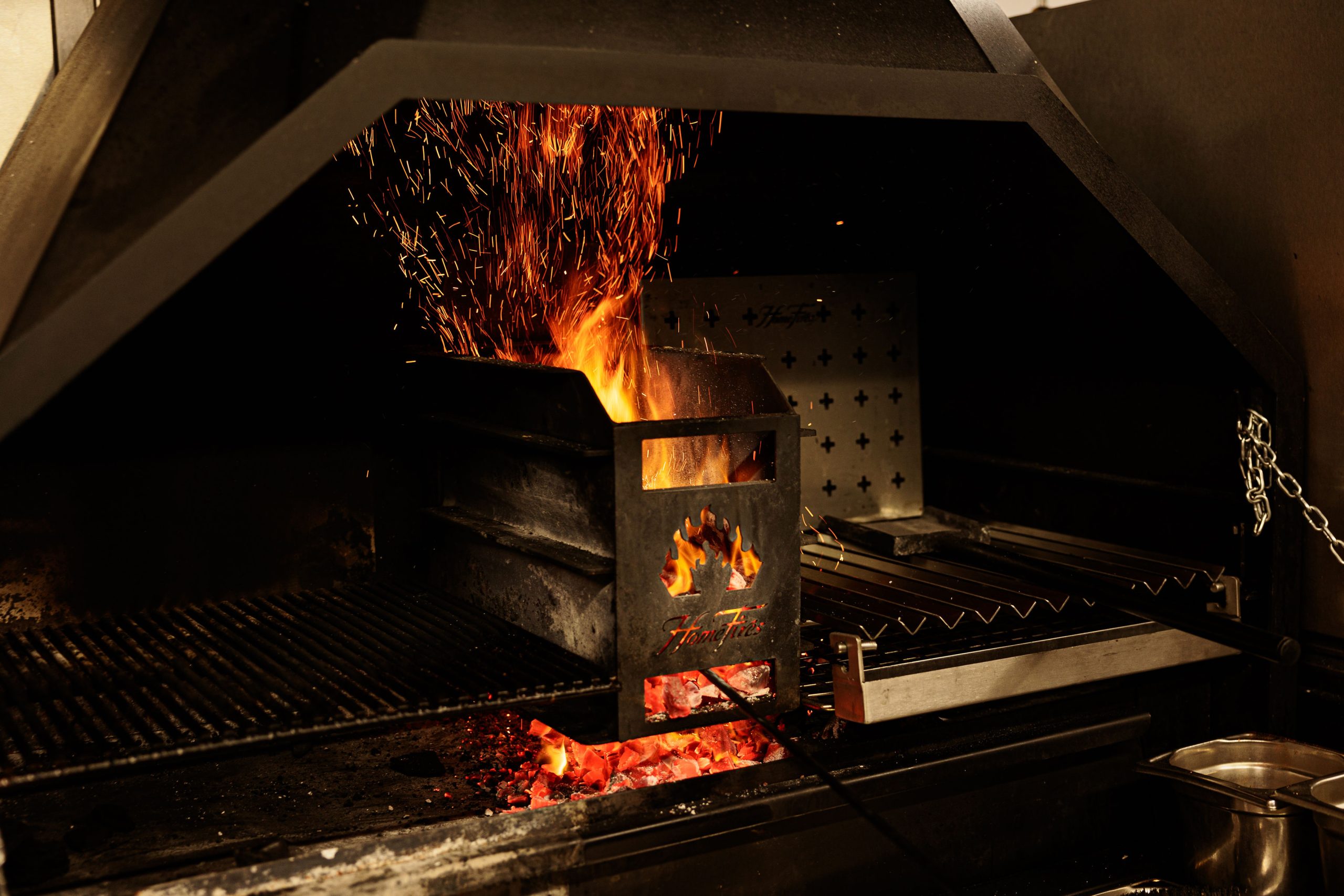
Physically located within the Kilkenny Hibernian Hotel, but positioned as an entirely seperate venue, Ember was opened by Cliste Hospitality in 2024. Developed around open fire cooking, seasonal produce and a distinct standalone identity rather than operating purely as a traditional in-house hotel restaurant. In a smaller volume rooms hotel, the strategy centred on developing greater commercial resilience through a ground floor concept capable of competing within Kilkenny’s wider restaurant market while simultaneously capturing resident demand, transient tourism and local footfall.
Head Chef Jonathan Webster described the approach succinctly: “At Ember, it’s not just about the food but the whole atmosphere.”
Increasingly, that is where stronger hotel F&B concepts are differentiating themselves. In a market where accommodation product is becoming more standardised online, experience-led dining is becoming a more important driver of brand distinction, local relevance and overall guest perception.
About Cliste Hospitality
Founded in 2019, Cliste Hospitality was established with a clear ambition to redefine hotel management in Ireland through community focus, strategic leadership and long term value creation. Cliste was created through a management buyout by co-founders Paul Fitzgerald and Sean O’Driscoll, two leaders with more than a decade of collaboration in hotel asset and capital management. The company has grown from managing eight hotels to a portfolio of 13 hospitality venues today, including 11 hotels and two independent restaurants across Ireland. Cliste Hospitality operates as an ownership and management platform, developing hospitality businesses that become part of their local communities, enhance guest experience standards and create sustainable, future-focused value for owners and investors.