
The profile of the hotel guest is changing, but so too are the factors determining whether they travel in the first place. Hilton’s 2026 Trends Report found 64% of travellers search for pet-friendly accommodation, with pet-friendly now its fifth most-used search filter, while Booking.com’s 2025 international research found 29% of dog owners choose their holiday destination based on how dog-friendly it is and, 46% experience anxiety about leaving their dog behind.
While Aviva and Direct Line recently collaborated on a joint research piece, Paws on Tour 2026, finding 62% of UK cat and dog owners take their pet on holiday and 40% consequently choose pet-friendly accommodation. For hotel owners, these figures point to something more significant than a growing preference for another amenity: for an identifiable segment of travellers, whether their dog can come influences destination selection, accommodation choice, propensity to travel and ultimately spend.
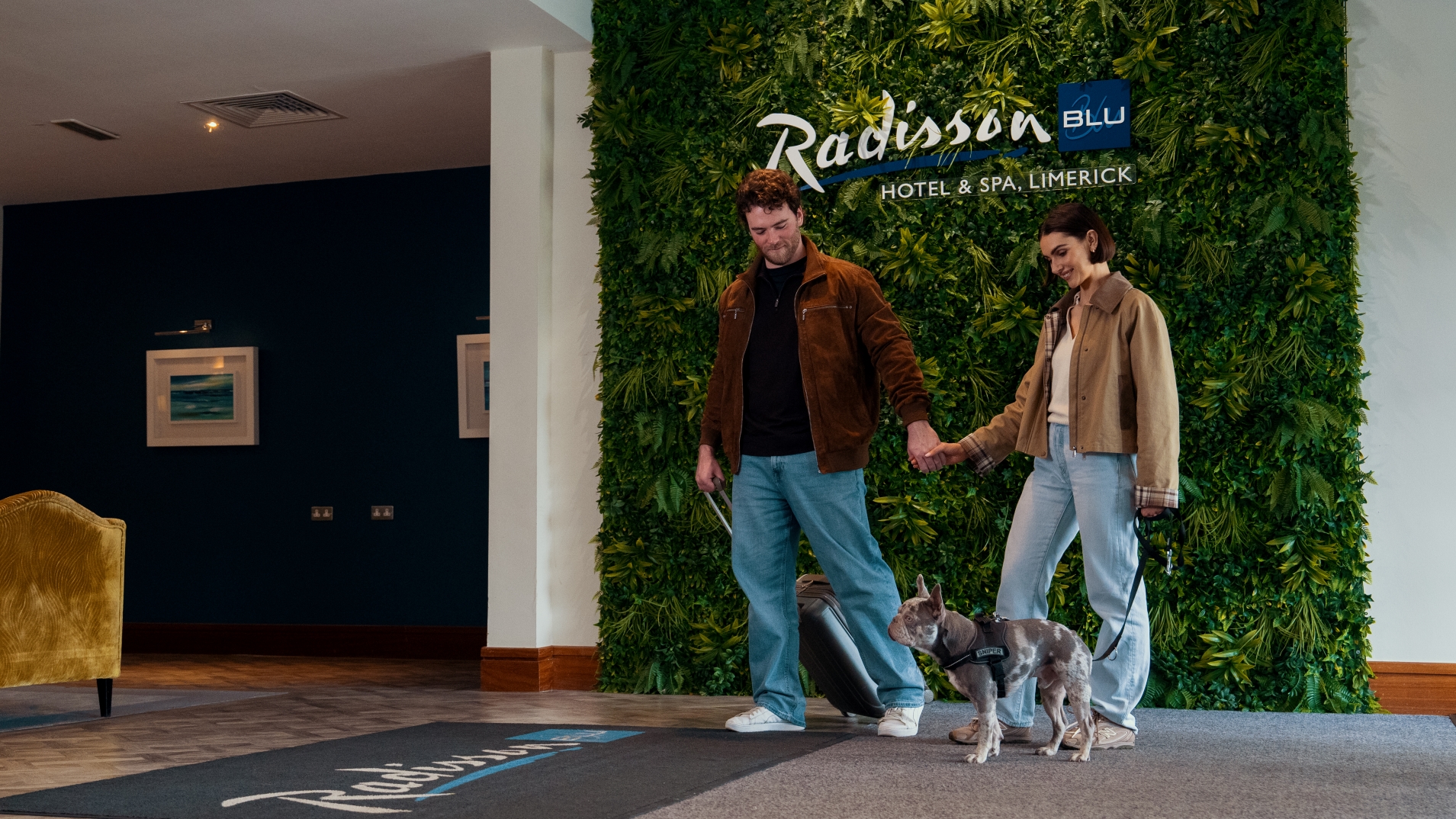
At Cliste Hospitality, we continually assess the hotel proposition against changes in consumer behaviour and where relatively targeted changes can unlock additional demand. voco Belfast has long operated as a dog-friendly hotel, with Radisson Blu Hotel Cork and Radisson Blu Hotel & Spa Limerick now introducing dog-friendly stays, extending that proposition across three distinct markets in our managed portfolio. The timing is particularly relevant domestically: CSO recorded 15.3 million domestic overnight trips by Irish residents in 2025, an 8% year-on-year decline, while outbound overnight trips increased 11%.
Against a backdrop where stimulating incremental domestic demand is increasingly important, removing a barrier that can determine whether a customer takes a short break at all has commercial value. But the opportunity extends beyond simply accepting dogs. Hilton’s 2026 research found 64% of pet owners prioritise their pet’s needs over their own when booking, while recent research into pet-friendly hotel experiences points to cleanliness, safety, accessibility and clear policies as important determinants of guest perception. The proposition therefore has to work operationally: from the information available during research and booking, to appropriate bedrooms, F&B access, nearby walking routes and how easily the guest can experience the wider destination.
For hotels considering the opportunity, the starting point should not simply be changing the pet policy, but designing the stay around the practical needs of the guest. Across our managed hotels, this means designated dog-friendly bedrooms, clear pre-arrival information, food and water bowls, dog treats and guidance on nearby walks and green spaces, while Radisson Blu Cork has gone further with a dedicated enclosed outdoor play area. These are relatively simple interventions, but collectively they remove friction throughout the guest journey and turn “dog-friendly” from a booking filter into a considered experience. For operators, that is the wider lesson: identify where changing guest behaviour is creating a barrier to demand, assess whether removing it makes commercial sense, and then ensure the product delivers on the promise.